Daitem D26 wireless alarm system
With the Daitem D26, you get a wireless alarm system that secures your rooms quickly and reliably. The system, including smoke detectors, can be installed quickly and cleanly within a few hours and is immediately ready for use.
The wireless components of the Daitem D22 can be used flexibly as they operate without a mains connection using long-life lithium batteries. These high-performance batteries have an average service life of approximately 5 years under normal domestic use.
Guaranteed reliability
The devices in the wireless alarm system communicate using coded frequencies. This means that Daitem is equipped to deal with attempts at interference and sabotage. If anyone tries to damage or remove the devices, your Daitem system will immediately sound the alarm. Unauthorised radio signals cannot interfere with Daitem’s wireless transmission.
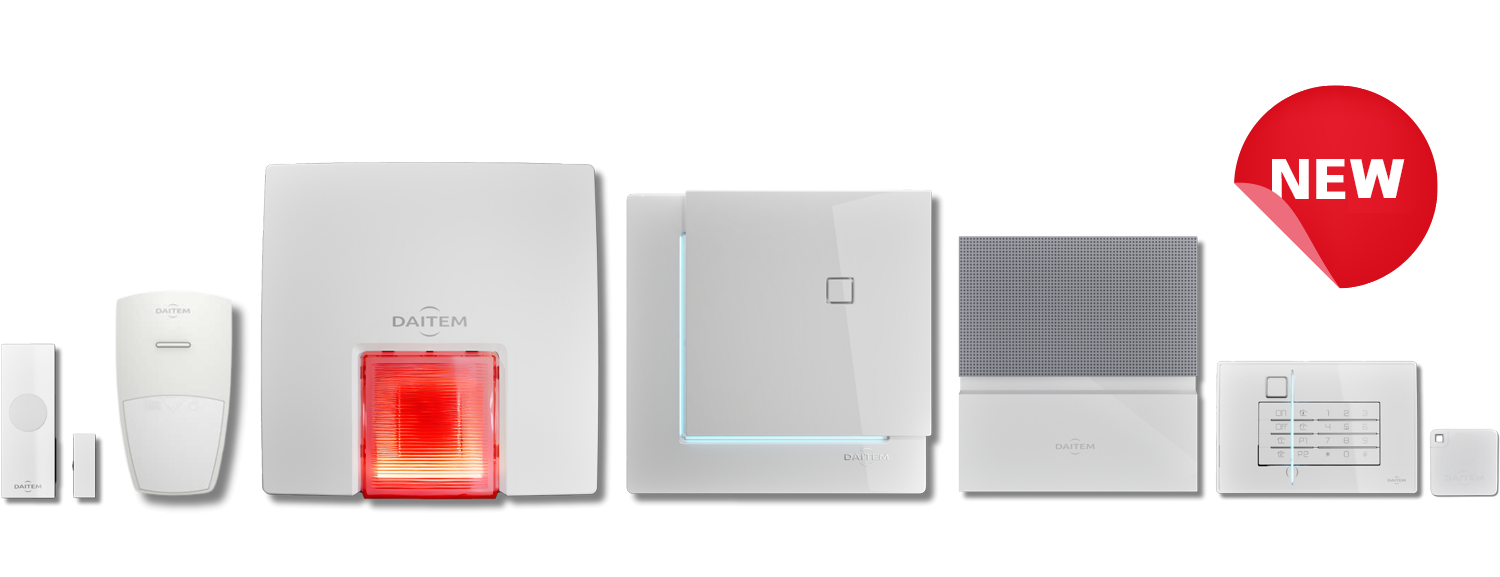
The individual elements
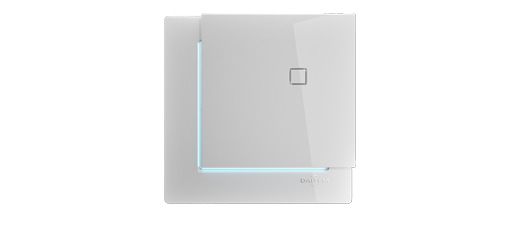
Alarm centre for the Daitem D26 wireless alarm system
The Daitem D26 alarm control panel forms the heart of the wireless alarm system. The alarm control panel of the wireless alarm system receives all signals from the sensors and, in the event of danger, forwards the alarm signals, e.g. to an outdoor siren or – via a telephone dialler – to an external security company.
- Programmable via built-in keypad or laptop
- Integration of up to 80 hazard detectors, identification of detectors via unique code
- Division of the system into 6 or 8 external monitoring areas
- Continuous monitoring of all devices
- Easy to understand operation thanks to combined signal and voice output
- Operation via handheld transmitter, code-enabled transponder and lock transmitter
- Optional telephone dialler. This can be used, for example, to remotely control the control panel
- Integrated siren for internal alarm, volume: 115 dB (A)/1 m
- A radio amplifier can be used in special circumstances
Burglar alarm for the Daitem D26 wireless alarm system/h3>
motion detector
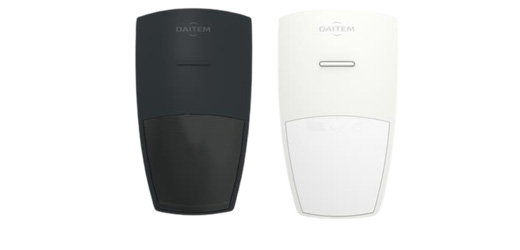
IR motion detector
 The IR motion detector detects moving temperature fields in the room and thus recognises people in the monitored area. In addition, unusual temperature increases or decreases, i.e. fire or frost, are detected; different messages are transmitted depending on the event (burglary/fire/frost).
Animal immune IR motion detector
The animal immune IR motion detector is used in the presence of pets; naturally, it also has a fire/frost detector function.
Dual motion detector IR/radar
The dual IR/radar motion detector reliably secures outdoor areas such as carports, gardens, terraces or holiday homes. No false alarms caused by animals, falling leaves or branches.
contact transmitter
The contact transmitter monitors windows, doors and other openings. A hall sensor detects any  change from the normal state (opening or closing) and triggers an alarm. Any attempt at tampering from outside is also reported by the contact transmitter. The contact transmitters can either be stuck or screwed to the windows.
Contact transmitter with vibration detector
In addition to the standard contact transmitter, we also offer contact transmitters with integrated vibration sensors. These additionally detect vibrations that occur when, for example, blows are struck against the window.
Outdoor Detector
Our tried-and-tested outdoor detector recognises potential intruders before they even reach your property and deters them with a loud voice message and strobe light. This prevents potential damage to your property. For verification purposes, you will receive a short video of the event on your smartphone.
Technical Reporter
The technical alarm system provides additional security by monitoring domestic appliances such as freezers.
Acoustic glass break detector
The glass break detector monitors the room by detecting glass breakage noises with simultaneous changes in air pressure. The glass break detector is not only used to monitor windows, but also large glass surfaces such as conservatories or shop windows.
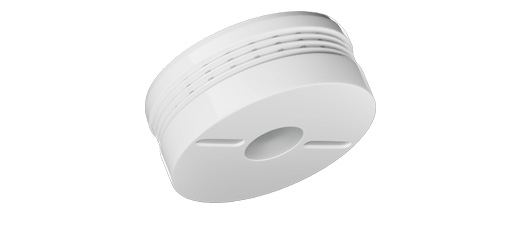
Smoke Alarm
The smoke alarm detects life-threatening smoke at an early stage and sounds an alarm directly on site. In addition, the outdoor siren alerts the surrounding area. The smoke alarm has integrated emergency lighting and automatic correction of the characteristic curve in case of contamination.
Controls for the Daitem D26 wireless alarm system/h3>
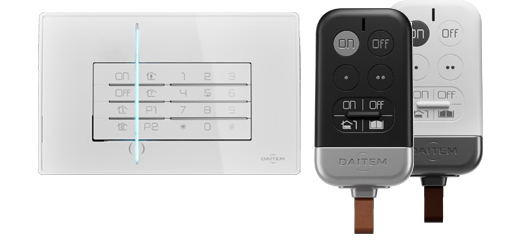
Handheld Transmitter
The handheld transmitters are used to arm and disarm the alarm system at the touch of a button. All commands can be triggered from inside and outside the building. With the 4-button handheld transmitter, you can also arm individual areas and activate the ‘emergency call’ function at any time – even when the alarm system is disarmed. If a channel receiver is available, a function for controlling light sources, for example, can also be stored.
Code Setup
 The code setting generally allows you to enter an individual key combination to arm or disarm the security system. Additional devices (gates, lighting, door openers) can also be operated via special radio receivers.
Depending on the version, the code setting allows you to check the system status visually as well as operate it. With the code setting with voice output, IR motion detector and transponder function, each command is confirmed by voice; the system status and alarm messages are communicated acoustically. The system is switched on or off via the code setting using a numerical code or transponder. Confirmation is given by voice. The IR motion detector detects approaching persons and activates the key illumination.
Alarm devices for the Daitem D26 wireless alarm system
Siren
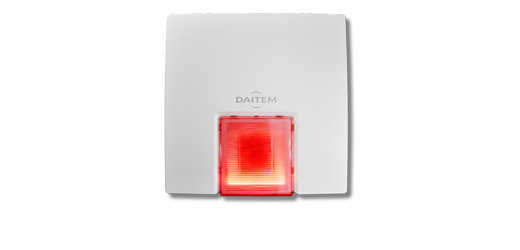
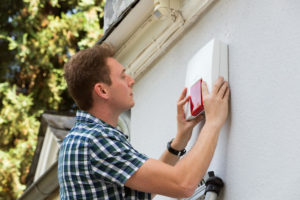 The siren is installed in a clearly visible outdoor area, where it initially deters potential burglars. In an emergency, its loud volume will scare off the intruder and alert the neighbourhood. The siren is triggered via the alarm control panel or the emergency button on the handheld transmitter. The siren is available in various designs, and models with a red flashing light can also be located immediately by sight. Volume: 115 dB (A)/1 m
Channel Receiver
The channel receiver for indoor and outdoor use enables remote switching of an electrical terminal device or lighting in the event of an alarm.

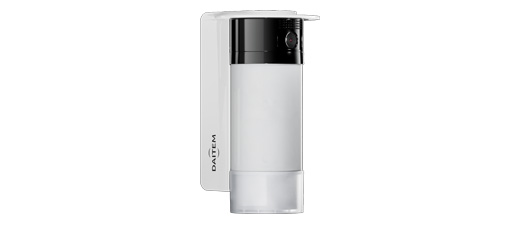


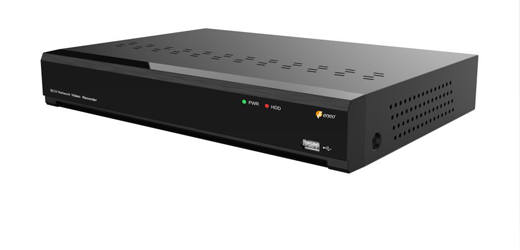

 Wireless weatherproof HD security camera. Recordings and camera functions can also be operated on mobile devices via an app.